Two movies about forbidden romance set against the fantastical world of Hollywood — it’s Singin’ In The Rain vs. A Family Affair.
Eye For An Eye: The Northman vs Valentine
Cry Me a River: The Batman vs Birth
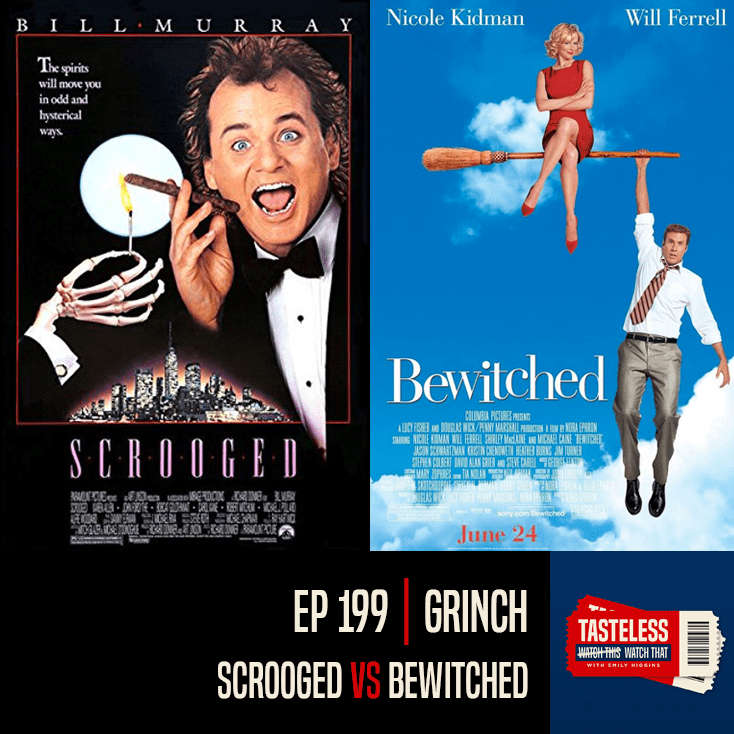
Grinch: Scrooged vs Bewitched
Growing Pains: Boyhood vs Practical Magic
Two honest and creative explorations of growing up — it's Boyhood vs Practical Magic.
Episode Transcript & Breakdown
Every episode of Tasteless, I take a critically acclaimed film and compare it to one that shares the same themes but didn't get the attention it deserves — and explain why that second movie is my pick. This week: Boyhood versus Practical Magic.
Boyhood
The life of Mason, from early childhood to his arrival at college.
Boyhood came out in 2014, it has a 97% on Rotten Tomatoes, it won an Oscar for Best Supporting Actress for Patricia Arquette, and it was nominated for five more — Best Picture, Best Supporting Actor for Ethan Hawke, Best Director and Best Original Screenplay for Richard Linklater, and Best Film Editing for Sandra Adair.
The piece of this film that has made it such a critical darling is that it was filmed over the course of 12 real-life years. They would check in and record for a week, film bits of this character's life. Everyone on the production actually aged as it went on. Richard Linklater was able to pull it off without being able to have contracts for this period of time — in California you couldn't have a contract longer than seven years. So he couldn't lock anyone in, and they just kept coming back to work on it because they believed in what he was doing.
Imagine having all the footage, getting to that last week of shooting, and then getting to stitch all of those pieces together that you've been collecting and saving and keeping from losing off your hard drive for this long. It must have felt so satisfying.
I saw this movie in theaters — maybe some of the most uncomfortable seats I've ever sat in. I remember sitting there thinking, when will this end? So I was excited to rewatch it on my own couch with a blanket and the ability to pause. And yet this movie is still a whole lot of nothing.
The shooting method is not something I have seen done again. It hasn't been matched. It is a brilliant idea. But if this movie didn't have this element of real aging, there would be no movie and there would be no awards. Boyhood is one of only 11 movies to receive a Metacritic score of 100 — and so far the only film to receive this score upon its original release. That's fully insane. I could admit upfront, this is not a movie for me. But come on — a hundred for this. Some of the other movies that have gotten a hundred are Vertigo, Casablanca, The Godfather, Citizen Kane. And Boyhood.
Eller Coltrane plays Mason Jr. and the film is ostensibly about him, but I found him to be one of the least developed characters in the piece — not through any fault of the actor, just there wasn't that much for him to do. Watching him grow is the most exciting element. He's the cutest, tiniest little boy at the beginning and then you see all his haircuts and varied amounts of facial hair as the movie goes on, and an ear piercing. He was seven when the movie started filming and 19 when it finished. The fact that the parent characters were nominated for supporting Oscars feels really misguided to me, because this kid — the boy, who the movie is named Boyhood after — is the most boring kid on earth.
Again, not the actor's fault. This character is just the worst and he becomes worse as the movie goes on. At the end of the film he's talking about the passage of time and he goes, it's constant, the moments. It's like it's always right now, you know? And that's what the movie leaves you with. Everything he says is in a stoner monotone.
He's someone in your high school that you try to avoid eating with because he'd just be talking about how bodies aren't even real, man, and he's gonna get off the grid. Barf. Get out of here.
We needed him because his physical change is the best highlight of what this movie accomplished. If we had just seen two adults over a period of 12 years, it would have been — well, it would have been Richard Linklater's Before Trilogy, housed in one movie casing.
There were a few moments of the childhood that I really liked. He was right, it is just moments. He and his sister have to go somewhere in the car, they're moving, and Patricia Arquette is like, keep the barrier between you. Where'd the barrier go? As somebody who has a sibling that they rode in the car with, you know you need a pillow between you so you don't start poking at each other. She tells them to play the silent game, a classic. And when their daddy Ethan Hawke comes over and they're fighting to show him their rooms and their stuff — those moments felt very real.
The boy has some very real, very awful haircuts. At one point he comes home drunk and high and his hair is — it's tough stuff. And the graffiti in his room that he did, he takes this graffiti camp and does brown and green graffiti on his wall. It's not good. It's awful. But again, realistic, because what kid's gonna have incredible graffiti on their wall?
Patricia Arquette as the mother is my favorite part of the film. In real life she's someone who's very outspoken — her Oscar speech for Boyhood called for wage equality and equal rights for women. A risk, to get up there in front of producers and directors and people who finance things and say, I'm going to speak my mind. She chooses interesting movies. She has built shelters in Haiti. She uses social media to share information that can help people and ways to enact change. She walks the walk.
Her character Olivia is the most fleshed out of everyone. All the actors are talented, but we explore so much of who Olivia is and her ups and downs. She tries to change herself. She goes back to school, works to become a professor. We see her in her classroom, clearly passionate about her work. She invites all her students over for Thanksgiving, giving them a place to spend the holidays. And as we check in with her throughout the film, we see the awful men she chooses to spend her time with.
I get mad at her — get mad at the way she lets men treat her children. I get mad when she screams at her daughter, like, you think things are hard for you? Well at least you can get your head slammed into a wall by your husband. Don't put that on your kid. But we also see her with her fellow teachers, with her friend Carol who took her in after her breakup from the abusive stepfather. I love that these people from her life carry through. She maintains those friendships and she finds fulfillment. She realizes she can't subsidize the life she had with a family of four, but she strives to find something that makes her happy while also supporting her children.
And yet every other scene of Mason with his dad is them complaining about her. Like she's trying to keep a roof over the kids' heads while you drive your stupid car around, Ethan Hawke.
The Ethan Hawke of it all — I do like him. He gives his son this gift, a CD he makes called The Black Album, all the solo stuff of the four different Beatles stitched together in just the right way. He talks about it for a while. He actually made that in real life for his daughter Maya to deal with the breakup of his marriage to Uma Thurman, and Richard Linklater took it and put it in the movie. I would be so mad if my dad made me this thoughtful, albeit really pretentious, gift and then it was used as a prop in a movie to further his fictional relationship with someone. That would drive me nuts.
I would also be really mad if my dad wanted to be a musician. Every time Ethan Hawke pulled out his guitar and started playing, I was like, boy, okay, we're doing this again, buddy. He's aimless, he wants to be a musician, he pops in with his cool card, takes the kids out bowling and then brings them home and they haven't done any of their homework. I love when he gets the new wife Annie, because she is actually an adult.
It's on the Criterion Channel if you want to watch it. It is what it is. It is this gimmick and that's, you know. Watch one of those videos where someone takes a picture every day of themselves for 365 days instead.
Practical Magic
Two witch sisters raised by their eccentric aunts in a small town face closed-minded prejudice and a curse which threatens to prevent them ever finding lasting love.
This movie came out in 1998. It has a 21% critics score — maddening — but a 73% audience score. That is a huge discrepancy. This movie struck a chord with people. It opened number one at the box office. It didn't make its budget back, but it's become such a classic, such a favorite. It's based on a book by Alice Hoffman — they changed quite a bit of the story.
Our starring duo are two of my absolute favorite women, and this is my show where I can spend my time discussing Sandra Bullock and Nicole Kidman for as many hours as I would like.
Sandra Bullock is an icon, a talent, immensely charming, loved by all. Her movies remain my favorites because they make me feel good. There's a groundedness — she is this gorgeous, brilliant woman and yet she is the everywoman. She will trip and fall if it makes people laugh. In real life she supports causes that matter, has no public social media, and raises her children out of the spotlight. She is not a modern-day celebrity hungry for fame, but just a talent. A true talent.
In this movie as Sally, she does magic with such confidence. There's a hesitance in not wanting to embrace her gifts, but I would fully trust her to do a spell — even when she's doing spells she shouldn't do. Her character is a martyr in so many ways. She stays behind wringing her hands at Nicole fleeing off into the darkness. She's a nervous person. She knows about this curse placed on the Owens sisters — that any man they love who loves them will die. When she meets a man she loves and has children with him, she is waiting for that other shoe to drop.
Before these men die, they hear the sound of a Death Watch beetle. She hears it, and the dread that builds as she starts pulling up floorboards looking for this beetle — it is so tense, so palpable.
That's the other thing people have a hard time with in this movie. It is a real mixture of tones. It feels gothic, fantastical, dramatic, funny, silly, witchy. It is all those things — and it's not a mishmash that doesn't work. It's a perfect blending of all of the real emotions and things that happen to us in life, besides the magic.
I have such respect for Sandra Bullock's talents, but rewatching this movie, I also noticed that her hair is the most perfect anyone's hair has ever looked. From now on I will just be bringing my Practical Magic DVD to the hairdresser with me because you can't beat it.
During a press junket for this film, she told reporters that the failure of Speed 2 convinced her to stop trying to make blockbusters and focus instead on interesting projects that helped her stretch as an actress. Hope Floats was her first film under this new professional ethic and Practical Magic was the second. She's made the right choices, because these are films that continue to be beloved.
Something that Sandra and Nicole share that makes this movie work is a grasp of humor as well as drama. Both have laugh-out-loud moments which anchor the film through the incredibly raw moments shared over possession, abuse, magic, and being a woman. They're not like — one has to be the funny one, one the serious one. They're both funny in equal measure, sad in equal measure. That's why it feels so real.
At the 2018 Oscars, Sandra said they'd asked Nicole to get the tequila on set. She came back with her own tequila, but they drank it anyway. "We were a little drunk." Kidman said: "I love that movie. I showed it to my kids." Bullock agreed: "We're really good sisters. And really good drinkers."
My cat, for the record, is named Gracie Lou Freebush after Sandra Bullock's character Gracie Hart's alias in Miss Congeniality. One of my favorite films of all time.
Nicole Kidman is someone else I will watch in whatever she does. I will be first in line for Being the Ricardos. My favorite movie of hers is The Stepford Wives and I don't feel bad about it because I've also seen Dogville and Birth and Rabbit Hole. She's always working and always impressing. She chooses such great projects — from Moulin Rouge to The Killing of a Sacred Deer. You don't know what to expect from her, which is exciting.
She has quite an intense scene in this film when she is possessed. Griffin Dunne, who directed the movie — he's also the actor in An American Werewolf in London — was talking to Yahoo Entertainment, remembering the exorcism scene that serves as the climax of the movie. Kidman wanted to bang her head on the floor as Gillian is violently propelled backwards by a witchy force field. Rubber panels and rubber wood strips were laid out. Take after take slamming her head. She looked totally possessed.
Nicole in this film becomes so scary. She is possessed by this abusive Dracula freak. I want more villains from her, because that coldness she carries in The Killing of a Sacred Deer, or even The Beguiled — she is so good at sending a chilling, withering look. To do this bigger, possessed, scary, nasty role is really impressive.
Stockard Channing is Aunt Frances. She did this incredible thing where, when it came to releasing the film abroad, there was a clause in the contract that if an actor can speak a certain language, you can dub the movie. She immediately said she could speak French, mainly because she felt like going to Paris. One of the stupidest things she'd ever done, because the French script ran across the bottom of the screen and she had to narrate the beginning. By the end, she said she basically had a Bulgarian accent. Somewhere in the world there was a copy of her dubbed in French in Practical Magic. She was sure the minute she left, they hired someone else to do it right.
Dianne Wiest is Aunt Jet — The Birdcage, Edward Scissorhands — and she is a perfect foil for Stockard Channing. These two just fit together. Again, like Sandra and Nicole, one doesn't have to be crazy, one doesn't have to be timid. They're just two regular, magical, delightful people who have such love for each other and for their nieces that they take in when the girls' mother dies of a broken heart. Which was really rude, honestly. Imagine your dad dies and then your mom dies of a broken heart and you're like, I'm not enough for you to stick around for? Geez Louise.
One of the best scenes in all of cinema history is in this film — legitimately. It is silly and it feels good. It's an encapsulation of the best of being with loved ones, of what it can be to really let loose. It is the lime and the coconut midnight margarita scene. A scene I have watched so many times on YouTube. A scene I would put my DVD in my original Xbox and just skip to that chapter heading.
The hilarity of that scene transitioning into such a darkness — because they realize this bottle of alcohol is from the abusive ex who Sandra and Nicole wind up accidentally killing in self-defense when he tries to brand Nicole. They become poisoned against one another, screaming. It's really scary. They suddenly turn hateful after the dance scene ends.
Goran Visnjic plays the bad guy, dating Nicole, and he has so much passion and so much charm and that turns deadly, which makes for a perfect villain. When Nicole realizes he is exerting his control over her too much and tries to escape, he won't let her. He tries to kidnap both her and Sandra. Sandra puts some sleeping spell stuff in his drink, he takes too much, and he dies. They bury him, then think — the cops are going to find out — so they bring him back to life. That doesn't go well. They kill him again.
His foil, his opposite, is the good guy cop Aidan Quinn. He's there clearly for Sandra Bullock. He is her true love, her match, but he starts out as just an investigator of this case. One of the things I love is that he actually sees the dead ghost zombie Goran attack the women. It's not just that he doesn't believe them — no, he sees it himself and has to decide what to do with that information.
Sandra really can get me into a random white man. I thought I didn't care about Bill Pullman and then I rewatched While You Were Sleeping. Aidan Quinn is maddening as the cop investigating her for murder, but he's so charming and dreamy and perfect for her.
He has one of the best lines in the film. She's worried because she thinks he's only with her because of some sort of spell. She says, you'll never know if I'm only with you because I don't want to be arrested. And I'll never know if you're only with me because you are compelled to be. And he says, curses only have power when you believe in them. And I don't. And then as he turns away: you know, I wished for you too. It's very sweet.
Griffin Dunne had a witch consultant on the movie. He told Vulture — Vulture gets all the good Practical Magic dirt — that while he was developing it, he was never quite sure he had a real handle on the movie because witches had no great interest to him. But he loved the book and the setting. And when he was working with this witch consultant, it occurred to him that he was making a movie about something he does know a lot about: strong women. He grew up in a house with a strong mother and his grandmother. Three generations of formidable women. When he got that into his head, he realized it's not really about spells and spell books. It's about a legacy being passed from one generation to another.
Then the witch consultant wanted an additional $250,000 and her own Practical Magic cookbook. The producer told her that wasn't possible. She said she was going to put a curse on the movie and on Griffin. She left a voicemail that slipped into tongues. It was terrifying. The legal department couldn't listen to it all the way through — they were so freaked out. They just paid the witch off. Dunne says he got something great out of it: it inspired that incredible line, curses only have power when you believe in them.
According to co-writer Akiva Goldsman, the director's cut was a darker take on the material. Due to the marketing at Warner Brothers and extensive editing, it ended up a different version. Goldsman lost his copy of the original cut. Now that's my curse — the fact that there's a longer, darker version and I'm not getting to see it.
This movie's climax has some of the most aggressive hand-holding in film history. Like really aggressive hand-holding. It's on Max. It is such a good movie.
Shared Themes
Despite one film showing real aging of its stars and one featuring quite a bit of magic, both Boyhood and Practical Magic feature some of the most honest explorations of the journey that is life — the curveballs we're thrown and how to weather the storms. Each film is uniquely crafted to keep its viewers off balance while remaining rooted in the shared experience we all have of growing up and finding ourselves.
The timing of Boyhood is the source of its magic. Checking in with a family each year, their stories growing as we see them physically change. As observers, we feel the weight of these changes because we're not there with them every day with the changes being incremental. We are dropped in each year to what feels like a brand-new family.
We see Mason's life, experiencing each individual piece, allowed to come to our own conclusions about how it might affect the people growing up in this environment. I felt often like the third child, frustrated when Patricia once again wanted to uproot our lives and move to another city — a new school, new friends. Mason wonders about the world, about the point of life, about the social constructs of Facebook, about whether to stay friends with an ex. We see him participate in illicit activities, and when confronted by his mom — because he's an overall trustworthy kid — she lets it slide. She lets him stretch his wings, explore, and press on the boundaries of what's acceptable, because she knows he'll do what's best.
This trust gives him the freedom to try out what sort of man he wants to be without worrying about consequence. Do I wish he had settled on something other than contemplative stoner? Sure. But he's not hurting anyone. As a child, sitting with his mom's college students watching quietly, working to engage on their level. We see when the awful stepfather cuts his hair and he feels so upset over the bodily autonomy that is ripped away. He comes to terms with what is his own and what other people can exert their control over. Through it all he maintains a thoughtfulness, a carefulness that carries into his young adulthood. We see who he will be and how he settles into it. He never presses himself on anyone. He's careful to accept what other people want.
Patricia Arquette contends with the dissolution of an unhappy marriage, then two more abusive partners. She's a strong woman who puts her idea of a family unit above what she herself knows to be right. She's the parent, she's an adult, but she still has learning to do. As she matures, she learns who she is and wants to be, and that she can put herself first occasionally and that's not wrong — that her desires and those of her children are more important than the world's idea of a nuclear family. Each time we see her, she's trying out a new version as she settles into her own skin. Each time a little more confident, each time making the slightly better choice. You just know the next time we see her, things will be going right.
Ethan Hawke lives the first big chunk of his life without a feeling of responsibility. He flits in and out of his children's lives. He claims he's a musician. But he realizes what his family needs from him is stability. He takes his actuarial exam. He plays his guitar for fun and goes to a job every day that makes money to support his wife and new baby. We don't see this change slowly. From one year to the next, we see the man who drives the muscle car and thinks he's gonna be a musician, and then he comes back with a minivan and a wife and a baby and a job. Because that's what happens in life sometimes — all at once it can change.
Growing up may not give us everything we want. With each new freedom comes a new caveat, a responsibility we were unaware of. It's in balancing those two sides — supporting your loved ones and keeping your guitar for your off time — that Ethan finds himself and becomes a man to look up to.
Because we don't see those changes, we can make assumptions about what good Annie has done for him, how she has helped him change his worldview. We can be more impressed with the man he's become because it's such a marked difference. When you see just little, little, little incremental changes, you don't know — you're looking at yourself, you don't know how much different you look a year ago compared to today. Someone else you haven't seen in a year is gonna see you and be like, whoa, what's up? Good or bad, depending. We have the luxury of checking in with these people to see their progress, like a height chart — measuring your height on one of those door jams. We never did that; we were not allowed to write on the door jams. But you don't do it every day and make a line a little further, a little further. You make a line when it's been a little while, so you can see that jump in height. That jump in progress.
Practical Magic was criticized for its mixing of tones, for its silliest moments being juxtaposed against its heartbreak and depictions of violence. But that's the beauty of this film. That's life. That's reality. We find humor in sadness, and without the lows, how could we appreciate the highs? Growing up doesn't stop because we turn 18 — we continue to grow and learn, and I love seeing the growth of adult women who come to terms with living life their own way.
Sandra finds true happiness with her husband and her children. She thinks she has escaped the curse that haunts her family. And then her husband is run over in the middle of the street where he stands grinning with his cart of apples. Is he stupid or is it fate? As his apples go flying, you understand what this means for Sandra — that she can't escape what she feels is coming to her. Aidan sets her free when he says, curses only have power when you believe in them. The idea of fate, of magic — it doesn't matter whether it's real. What matters is whether you believe and how you let that affect your choices. Tragedy doesn't have to be an ending. It can become a beginning of something new.
Sandra takes control of her own destiny, choosing to trust in Aidan's love for her, not ascribe it to a spell. And that's the most impressive growth of all. I don't think you can choose to be happy, but I do think you can choose to trust other people, to trust yourself and your judgment, and that it takes quite a bit of maturity to do that. Maybe it is magic, maybe she is cursed — but if you trust in the love, does it matter where it came from?
Nicole chooses the wrong men, never sticking around for very long, relishing in the control they think they have over her because it means she's not responsible for herself and her feelings — the fate she's been avoiding, of falling in love and seeing that love extinguished. But you can only hand over the reins of your life for so long, and when the wrong man tries to take control, she reaches out to Sandra for help. The violence she suffers is brutal and all too common. Not only does Goran hit her, but once he is dead, he comes back and takes possession of her body, trying to rip away the one thing she has to herself — the one thing any of us have. It's so violating.
And the fact that she overcomes it through the help of the women of the town — the women whose judgment she has fled — is the perfect resolution. She left her home life not wanting to be tied to the fate she thinks is coming her way. And the movie ends with her back at home, domestic, spending time with her loved ones. It's such a wonderful shift, to not let those fears keep her from happiness. Now embraced by those whose eyes she once felt judgingly on her, she comes to terms with who she is — her identity when she has to sit with just herself. And that's how she manages to grow up.
Family is of course the axis on which these films rotate. Families that will weather any storm, families that love each other across distance and time.
In Boyhood, I don't love how often the subject of Patricia comes up between Ethan and Mason, often derisively. But we see how the two adults balance custody over 12 years, how they remain cordial, how they support one another in pursuit of their children's best interest. One of my favorite moments is when Patricia's mother goes over to Ethan Hawke's new wife and says, the baby's not here, I'd love to see him. And she says to Annie, you found him in a good time, I think. And Annie agrees — because she has. She got an Ethan who has grown a little bit, an Ethan who is ready for the trappings of fatherhood.
But — like everything in this film — it's then ruined by Ethan whispering to Annie about how awful Patricia's mother is. Look, we don't all love all of our family members, but as we collect people, as relatives marry and divorce, come and go, families aren't as set in stone as we like to think. But there is a core of love there that's apparent throughout the film.
Mason is supremely patient with his new step-grandparents, politely thanking them for the Bible-and-gun one-two punch of birthday gifts. He's really wonderful with his stepmother and half-brother. I appreciate that Annie isn't treated like a wicked stepmother — she wants to get along with these kids and they work to accept her.
Patricia chases the idea of a full family, marrying men who aren't good enough because of the hope that they will give her kids an easier life. Her story is the most compelling because she balances what she wants for herself — her education, her independence, an adult to share it all with — against her deep sense of duty to and love for her two children. Ethan creates a new family for himself but he doesn't abandon his prior kids. He merges the two and works to never make anyone feel less than. He forgets he promised his son his car — and I hated how quickly he brushed off his son as though it didn't matter, the conversation they had, the promises he made. But he does want to be there for him. His heart is in the right place. He comments at one point that it doesn't matter if either he or Patricia has to move. Things change, but they will always find each other. He won't ever give up on those kids.
Even when these characters make the wrong choices for themselves, they try to keep the family unit whole.
In Practical Magic, it's cheesy, but the scars Sandra and Nicole share from their blood oath bond them across continents. Doesn't matter how long goes between the two without talking. Doesn't matter how divergent their life paths are. They're connected. They love each other and when they reunite, it's as though no time has passed. Nicole gets into Sandra's tiny attic bed under the covers and they giggle and cry and fill each other in on what they've been up to. There's no amount of time or distance enough to separate these two.
The aunts that take them in never treat them as anything other than their own daughters. Their attempts to leave town so that Sandra and Nicole will clean up their own mess may be misguided, but it's further proof of the parental feelings they have for the two girls. They care about them, they worry about them, they want these women to be able to care for themselves. And when they need help, the aunts are back, ready to do whatever it takes to protect their loved ones.
This family has a lineage that is known by the town — a great-great relative who was a witch, who passed a curse down the family line, bound the Owens women with her heartbreak. And it's by appealing to this woman, to Maria, by joining hands with the current townsfolk — the women whose ancestors shunned her — that they break her curse. They share who they are with the women of this town and who their family is, that the beliefs about the Owens women are at least partially true. In embracing their heritage, they take ownership of it. Their family name is no longer a burden but a strength. They inspire the women of the town to join in and save one of their own.
I also love the way Sandra's children want to embrace all the things she has tried to forget. Life truly is cyclical. Once they spend time with their aunts and understand the power of their lineage, they're so excited, so proud of who they are. One of the cutest moments in the film is when Sandra embraces her magic and lights a candle with her breath while winking at her two daughters — who immediately start trying to do the same.
WHAT PRACTICAL MAGIC DOES BETTER
While both films are about family, Boyhood's relationships are fragmented. All the pieces are there, but they don't come together. Practical Magic is a perfect quilt of family and strangers and how their lives intersect.
In Boyhood, these people aren't comfortable or honest with one another. It feels like we watch a series of unimportant surface-level conversations. While the physical changes give us a sense of history, nothing about anyone's interactions indicates the same. The relationship between Mason and his mother is particularly disappointing because we only ever see nagging, complaints, Patricia defending what she has done raising them, asking them to stop fighting, telling them they're moving again, promising to talk to their jerk stepdad. But Mason and his mother never sit down with one another. They don't know each other. They're strangers in the same house.
Then we get to Mason's father — they do have fun, they go camping and to bowling alleys. They talk about how annoying his mother is and Ethan talks about himself. But again, we don't get a sense of who Mason is in these interactions. There doesn't feel like there's a sum of these parts. It doesn't feel like it adds up to anything. Ethan questions both of his kids, asking what's up with them, what they've been up to this week, and neither feels like answering. So he decides, okay, we'll let it happen naturally. But it doesn't. Nothing about this film is natural. It feels artificial.
Ethan and Patricia's big interaction near the beginning of the film is a fight that happens outside while Mason watches, unable to hear. We don't know what they said. We don't know what happened in their past. We rarely see them interact after that. Annie is suddenly there — the longest-term relationship — and we don't see how she and Ethan met, while we see Patricia's sparks fly with both her temporary guys. But we also never see how her relationships turn so sour. We really are just being dropped in at random points, which is good for time travel maybe, but not good for a compelling story that should be building upon itself.
The most meaningful relationship in the film is Patricia and Ernesto. This is the only piece that I felt built up. Patricia is a bit of a meddler and she wants everyone to be their best, so when she talks to a guy fixing her pipes and he's super knowledgeable and explains it to her in a way she can understand, she says, oh, you should go to school. He seems pleased with the compliment, but explains he has to work, he doesn't have time. And sometime later, Ernesto is their waiter at a restaurant. He's been taking English classes and he remembers Patricia and the compliment and encouragement she gave him. It changed the course of his life. Otherwise it's not like anything is predicated on what came before. It's just these pieces.
This movie is a checklist of life-experience clichés with no individual identity. A bunch of stars and no constellations — and without the constellations, we don't have a story.
This movie checks in in real time once a year and that's what it feels like — a perfunctory check-in. My probation officer is forcing me to watch 14 minutes of Boyhood every one year.
Realism doesn't need to be bad. All our lives aren't a thrill ride every minute of the day. I get it. But let's use the bullying as an example. We never saw any indication that Mason was being bullied before or after this. We don't see Mason's true reaction to it. It just happens. He does or says nothing — which is probably smart in the moment — but we don't see how he really feels later. The kids come in, they're mean to him, he says nothing, they walk out. The end. What is that meant to show us? Mason barely talks until he gets a girlfriend and then he talks a whole lot about the internet being bad for us. There's no identity here. There's not a through line. If there's no cause and no effect and we're just getting the middle of each story of this kid's life, how can we connect with him? He is a placeholder. He could be anyone. There is no reason it is this kid whose life we're exploring.
Practical Magic is about connection between women — sisters, mothers, daughters, aunts, your community, fellow mothers and townspeople, friends. Griffin Dunne very purposefully centered the love between these women over the magic, and so the magic becomes a connective tissue among these people, an underlying current that further strengthens the love we see and feel.
We see the Owens sisters at a few points in their lives: as children contending with the death of their parents and learning about the magic they carry in their blood; as young women, one choosing to shelter herself while the other runs as far away as possible, both in pursuit of escape; and as adults who fully embrace what they are. It doesn't matter how much time goes by — their love for one another cannot be erased. We see that mirrored in their aunts, attached at the hip, and in Sandra's children who are always together taking in the world around them.
Sandra is listless when Nicole first leaves town, making the aunts so worried about her that they concoct a spell to get her out of her comfort zone and meet her husband. It is crossing many boundaries, but they want to see their niece happy. The moment Nicole is in trouble, Sandra is willing to sacrifice everything for her. She screams at the man holding them hostage for trying to brand Nicole. She drugs him to get her sister to safety, helps bury his body when he is mistakenly killed. And when Nicole wants to bring him back to life so that they don't get arrested, Sandra uses her better grasp of magic to make it happen.
Love sometimes leads to making questionable choices. Sandra's love for her sister and desire to make her happy leads to the mistake of bringing back an evil dead man. But that's what love is — it strengthens and it weakens us.
The aunts try to do a little tough love by leaving the girls, but they put charms on Sandra's children to keep them safe so the lessons learned won't negatively affect them. And when they sense they are needed, they return home, ready to face evil at the side of their family. You understand why they would leave but are so happy for their return. Their presence gives Sandra the strength she needs to pull together the town and rescue Nicole — which she does by reminding her of their blood oath, of their bond.
Practical Magic takes the elements of growing up and grounds them in fantasy. It sounds crazy, right? But while we relate so much to what's happening, there's this extra layer of intrigue that keeps you watching. It's like a street magician distracting you, having you look over here while really something's happening over there. They give us a little magic, a little razzle-dazzle, while also providing the backbone — which is the compelling story and characters.
The clichés of young girlhood — imagining a perfect husband, running off with a boy — they're there, sure. But we see what these stories do to our characters, how these moments change them, or how these moments make them realize who they don't want to be. And yeah, doing a blood pact is tired. Usually it's little boys army-knifing each other. But it's because of this pact that the women sense something is wrong with one another. And it's because of this pact that Sandra is able to save Nicole from the possession in the exorcism scene. There's a reason for that cheesy, silly moment to occur.
At first I hated it when young Sandra is writing her little list of what a perfect man is — she does a spell to bring herself the perfect man. It feels trite. But it's because of this list, the specificity of it, that the viewer can start to realize that Aidan the cop is that man. One of the identifiers is that he has two different colored eyes. The minute you see his eyes, you're like, oh my God, that's him. The viewer is part of the story, told as a beautiful fairy tale but grounded in the reality of human connection.
If you haven't watched Practical Magic — or if you have — watch it again. Get a blanket and some hot chocolate and put it on and cry like I did. It's on Max. It's the perfect winter evening. I actually watched it at 2pm the other day and cried very hard.
Has there ever been a duo that could match Sandra and Nicole? I just don't know. It's pretty perfect.
Flesh and Blood: The Royal Tenenbaums vs The Killing of a Sacred Deer
Two movies about dysfunctional families exploring the possibility of redemption — it’s The Royal Tenenbaums vs The Killing of a Sacred Deer.
Under the Surface: Jaws vs Bombshell
Episode Transcript & Breakdown
Every episode of Tasteless, I take a critically acclaimed film and compare it to one that shares the same themes but didn't get the attention it deserves — and explain why that second movie is my pick. This week: two movies where the villain is shrouded, where humanity and decency must triumph over convenience and greed. It's Jaws versus Bombshell.
Jaws
When a massive killer shark unleashes chaos on a beach community off Long Island, it's up to the local police chief, a marine biologist, and an old seafarer to hunt the beast down.
This movie came out in 1975, has a 98% on Rotten Tomatoes. It won three Oscars — Best Sound, Best Film Editing (by the way, a woman, Verna Fields), and Best Original Score — again our guy John Williams. Will he ever be on the right side of a Tasteless pick? Looking at his long IMDB of classics, probably not. Jaws was also nominated for Best Picture, but lost to One Flew Over the Cuckoo's Nest.
What struck me about Jaws is when the Kintner boy is killed and his mom puts out a reward for capturing the shark that did it. The reward is $3,000. People go to fight a shark for $3,000. And you're thinking, oh, that was old-timey money. Well, in today's purchasing power, that would be $14,586.36. Excuse me — would you go into the ocean to catch a shark for a little under $15,000? I don't think many people would.
We've got our classic characters here. Brody, played by Roy Scheider — he is the sheriff of this town, the law. He's a nice guy, he has a wife, he has kids, he wants to do what's right. He gets the famous line which, according to writer Carl Gottlieb, was not scripted but ad-libbed by Roy: you're gonna need a bigger boat. How many times do you think people say that to him every day? I would lose my mind.
Then we have the scientist Hooper, played by Richard Dreyfuss. I didn't remember that Hooper is rich. He comes to this town and he's like, hey, I hear shark stuff is happening. What's up? I got a boat, I got equipment. Also, I have all this stuff because I am very wealthy. My family is very wealthy and they just put me on a boat and said, go for it, man. He's out here measuring shark mouths, just having a good time.
Then we have Quint, played by Robert Shaw, wearing a sweater that looks very itchy. Quint is the seafarer from the plot description — he's the shark-hunting expert. His ship, his rules. He's like Boomhauer of the ocean.
Some insane IMDB trivia: though respected as an actor, Robert Shaw's trouble with alcohol was a frequent source of tension during filming. Roy Scheider described his co-star as a perfect gentleman whenever he was sober — all he needed was one drink and then he turned into a competitive son of a B. When it came time to shoot the infamous USS Indianapolis scene, Shaw attempted to do the monologue while intoxicated, as it called for the men to be drinking late at night. Nothing in the take could be used. A remorseful Shaw called Steven Spielberg late that night and asked if he could have another try. The next day, Shaw's electrifying performance was done in one take. Okay, I feel like he's getting an awful lot of leeway. Also, Shaw apparently bullied Richard Dreyfuss, which honestly, when you look at him in this movie, I wanted to bully him too, so I don't blame him for that.
When we talk about Brody, Hooper, and Quint, I cannot imagine three people I'd want to be stuck on a boat with less. When they're showing off their scars and it's supposed to be this great bonding scene, it's like — an eel bit me. Okay, cool, I guess. I don't know, are eels supposed to bite you? That's not a cool thing. I was arm-wrestling because I hate my ex-wives and now I can't extend my arm. Okay, great brag, Quint. What are you talking about?
I have a hard time with this movie because I am on the shark's side 100%. Just let this shark have the ocean. It's his. You lost. Your fleshy bodies keep getting eaten. Find somewhere else to hang out. Build a pool. I'm Team Bruce. Bruce, of course, is the name of the mechanical sharks they built for this set. In addition to the well-known nickname of Bruce, Steven Spielberg also called the shark "the great white turd." Notoriously, the shark broke down, didn't do what it was supposed to — they built it and were like, it works great. Then they put it in water and it didn't work because it didn't work in salt water. Nonsense.
But I am very scared, not of sharks, but of animatronics. As a child, probably 11 or 12, I went to Universal, went on the Jaws ride. In the ride, a big mechanical shark comes up to your boat and kind of splashes around and your tour guide is like, oh no, oh no, and shoots at it and flames explode. And I had nightmares for months after — not about being eaten by a shark, but about falling in and having the gears and mechanics grind me up that made the shark go. I did the Universal Studios tour in California within the last couple of years and again saw that mechanical shark and was like, no, he's gonna get me. He's hanging out in the Murder, She Wrote village.
Everyone has seen Jaws. You know the plot. There was a very fun trivia fact: several decades after the release of Jaws, Lee Fierro, who played Mrs. Kintner — the mother of the boy who gets eaten — walked into a seafood restaurant and noticed the menu had an Alex Kintner sandwich. She commented that she had played his mother so many years ago. The owner of the restaurant ran out to meet her. He was none other than Jeffrey Voorhees, who had played her son. They had not seen each other since the original movie shoot. Very cute. Very chill name for that kid, Jeffrey Voorhees.
Bombshell
A group of women take on Fox News head Roger Ailes and the toxic atmosphere he presided over at the network.
This movie came out in 2019, has a 68% on Rotten Tomatoes. It actually won the Oscar for Best Achievement in Makeup and Hairstyling for Kazu Hiro, Anne Morgan, and Vivian Baker.
My old roommate slash good friend is an incredible makeup artist, and she brought me along to a makeup guild screening of this film. It was such a great movie. I loved it. It had one of the best trailers of all time, as far as I'm concerned — where the three stars get into the elevator and that song is playing and they're looking at each other. It's so good.
At the screening, Kazu Hiro was there and mentioned that he had worked on Mighty Joe Young with Charlize. As it turns out, Charlize Theron coaxed prosthetic makeup artist Kazu Hiro out of retirement for his work on this film, and he won his second Academy Award for his efforts. He had previously won for Darkest Hour after turning Gary Oldman into Winston Churchill. When I saw the trailers, I thought her Megyn Kelly makeup was going to be distracting, but once you're watching the movie, it really works. She does a good job of recreating Megyn's look and vibe.
Charlize was nominated for Best Actress at the Oscars and Margot Robbie was nominated for Best Supporting Actress. Charlize lost to Renée Zellweger for Judy — people love a sad biopic — and Laura Dern won Supporting Actress for Marriage Story, which I am highly uninterested in. I think Margot's performance in this movie is incredible, as is Charlize's.
Let's talk Charlize. She plays Megyn Kelly, a real person, a Fox News host and anchor. She wields the word "feminist" like it's disgusting. She says at one point, I'm not a feminist, I'm a lawyer. The way they use the word feminist as an insult does remind the viewer of where we are, of what world we're in — slash just the human world. Having Charlize as Megyn narrate the story, talk to the camera — I really enjoyed it. When that works, it really works.
There's a hardness to her because there has to be to survive in this world. I am not a fan of the real Megyn Kelly — the one kind of big thing they allude to is that she said Santa is definitely white, which — okay, he's imaginary, so I don't know what you're talking about. But I'm not endorsing the actions of any Fox News employee by saying I love this movie. Regardless of party lines, this is a story that is important, a story that needs to be told. The fact that so many of these women had the same thing happen and all were worried about coming forward, about losing their livelihood — when Gretchen Carlson came forward, it broke a dam. There is bravery in that. We can't just care about crimes happening to people we agree with. That creates a bad system for everyone.
Nicole Kidman is perhaps the most sidelined in the movie as Gretchen Carlson, even though she gets the ball rolling on the charges against Roger Ailes. We see her talking to lawyers about the way she's been treated, playing back tapes of all the times on air that men said disparaging, disgusting things to her — and she bit back, but had to laugh it off, because otherwise it's going to be awkward. She had to act like she was in on the joke, like it was all in good fun. Because there's that famous saying: men are afraid that women will laugh at them. Women are afraid that men will kill them. You don't want to set someone off.
It's very affecting to watch her watch herself. Think back about how you've handled difficult situations — I don't think all of us have always been at our best. She wants to make it clear that just because she laughed along awkwardly, that's not what she wanted. She doesn't want to be treated that way. And it's important to remember that just because someone laughs along, doesn't mean you should be saying those things.
Margot Robbie plays Kayla, the composite character of the trio — not based on a real person, but instead an amalgamation of various reports about working at Fox News. She's a quilt of the bad experiences these women have faced, and we empathize with her bright-eyed optimism, her wit.
The scene of real-life character Roger Ailes asking the fictitious character of Kayla Pospisil to lift up her skirt was filmed with multiple cameras capturing all the angles at once. Jay Roach didn't want Robbie to have to perform that scene for more than one take. This is a brutal scene and she plays it so well. It's so real. It's so striking.
Basically she goes in to meet with Roger and he says, stand up and do a little spin. And she's kind of like, what? He says, you know, on-air talent, you're going to be on camera, I just want to see you. And she goes, oh, okay, and does a little spin. He goes, okay, lift your skirt up a little bit. She pauses a little longer and pulls her skirt up a little bit. He goes, higher. She pulls it a little higher. Inch by inch, it comes up so you can see her underwear and she is mortified. She is humiliated. And he's like, okay, great, well, you better prove your loyalty, and sends her on her way. And the other heartbreaking thing — she's like, could you not tell anyone about this? And he's like, of course not. She doesn't want people to know, because she'll be blamed. She did it. She agreed to do it.
A reason it's so hard to watch is because, to a lesser extent, we've all been in situations where we go along with something we're not comfortable with so as not to rock the boat. Maybe someone says something inappropriate and you just sort of laugh and brush it off and hope it goes away.
Margot to me was the character I related to the most, and her relationship with Kate McKinnon is one of the more touching aspects of the film and one of the more frustrating and heartbreaking. Kate McKinnon plays a closeted lesbian, closeted Democrat who works at Fox and takes Margot under her wing. Kate basically says, here's how you survive here. Here's what you want in stories — you want to frighten and titillate. Ask yourself what would scare your grandmother and piss off your grandfather. That's a Fox News story. She's funny, but it's also sad that she can't be herself. Her and Margot wind up going home together, sharing a bed. There's a chemistry there. But neither can be who they are, and Kate has shoved her feelings so far down.
John Lithgow plays Roger Ailes in a lot of prosthetics. He's great. I love John Lithgow. Malcolm McDowell plays Rupert Murdoch. The supporting cast in this movie — I'm going to run through it. Darcy Carden gets to yell at Margot Robbie. Lennon Parham eats some grocery store sushi. Connie Britton plays Roger's wife and says at one point, very genuinely, hoodies are creepy. Alanna Ubach plays Judge Jeanine Pirro. Holland Taylor plays the secretary to Roger. Rob Delaney plays someone who works with Megyn. We've got Brie Larson, Josh Lawson and Ben Lawson as brothers, Liv Hewson, Richard Kind, Alice Eve, Madeline Zima, Ashley Greene, Katie Aselton, Tricia Helfer, Robin Weigert, Mark Duplass, Jennifer Morrison, Allison Janney. It is quite a cast.
Jay Roach directed another great political film, Game Change — and he directed all the Austin Powers movies, and that is called range.
Bombshell is a movie that I think you need to watch. It really does a good job of putting you in someone else's shoes. Would I have thought I'd watch and love a movie about Fox News? No. Absolutely not. But this movie did a great job of stripping away my biases, getting me on board with the universe we're in. Some people think it excused the women of Fox News, and that's where we get into a gray area, and we don't need to villainize. This is a story about assault. The villains here are the people who have built a system that allows that to happen without consequence, and that can happen to anyone.
Shared Themes
Jaws and Bombshell both have a villain that is lurking under the surface — an iceberg with most of the threat going unnoticed until it is far too late. A villain that people disagree on how to face. Some think their presence should be brushed under the rug, while others want to confront this villain head-on. It's insidious.
The villains are a real mean shark and workplace assault and objectification. Two sides of the same coin. Only those who have faced these threats themselves really understand the dangers. And other people are of the opinion: out of sight, out of mind. Don't go in the water. Don't wear a short skirt. But that's not feasible and it's not fair.
Jaws has one of the most iconic antagonists of all time in the form of its great white shark — a shark that gets only four minutes of screen time. The threat of the shark is what looms over the people of Amity, but the issue is that they disagree on just how big of a threat it is. We see this so clearly when Brody's wife comes in — Brody's reading a shark book and she's like, man, let's get drunk and fool around. The kids are out on some boat and Brody's like, oh my God, kids, get off the boat. And the wife goes, don't worry about it, they're fine. Then she flips open his book and sees a picture of a shark ripping flesh and immediately starts screaming at the kids to get back on land, listen to their dad. It takes seeing that picture in the context of her kids out on the water for it to feel like a real threat to her.
The fishermen that rush into the ocean to get their reward are giddy at the thought of this excursion. Chumming the waters, captaining their dinky boats, no fear, no respect for the wildlife. When Quint gets there, he basically says, hey dummies, sharks kill people. This is a problem and I could solve it. Everyone else had been very wishy-washy about wanting to keep the beaches open. They have this town hall meeting — the beaches are going to be closed? We gotta go to the beaches. Be quiet. Go away. People will come back to your beach. Chill out.
The main antagonist of Bombshell is Roger Ailes, though we explore the system that put him in power. If he had had beady little eyes and maybe too many teeth, would he have been taken down sooner? Seen as a real threat by those in his orbit, those who aren't directly threatened by him? Most people don't see Roger on a regular basis. He's on his own floor, his own office, with Holland Taylor guarding the door and a clicker remote that opens it. Very disconnected.
People joke about the workplace culture. They talk about how Roger has a separate elevator for women to arrive in. They joke about the other men there, like Bill O'Reilly. It's all said with a laugh, with no real threat. Margot loves Fox — it's been her dream to work there. She hears the stories about the misogyny in its ranks but continues to idolize the network until she comes face-to-face with Roger's harassment. Till he makes her lift her skirt.
She tries to bring this info to Kate McKinnon and is shut down. When Gretchen Carlson tells her story, many women of Fox scramble to support Roger, not wanting to look disloyal, knowing they can be replaced. Many women say it never happened to them, and one man comments that the women it hasn't happened to are not attractive. We see older people talking about how nice Roger is while younger women get more leg out to please him. We also hear the other side of Roger — the man who pays for cancer treatments and supports his employees. Some people think that gives him the right to act as he pleases.
It takes determined people from all walks of life to take down the shark and to take down Roger.
For Jaws, it's Brody with his guilt over the Kintner boy, with Alex's mom's funeral attire stuck in his mind — he is dedicated to keeping his town safe. He's scared of the water but goes in because it feels like his duty. Hooper joins because he's an expert, the person who has determined that the other shark caught isn't the threat. He's passionate about the field. Quint is the expert on the water, here for the money. He has the experience, the grit, the boat. These three different motives come together. They attack from all angles — with knowledge, with grit, with brains — and that's how they accomplish their goals.
For Bombshell, we have Gretchen Carlson, who has finally had enough, who has been humiliated and demeaned and shuffled to the worst time slots. She decides to do something, to say something. She gets the ball rolling with her public accusations and lawsuit. This leads to Megyn Kelly's crisis of faith — should she admit what has happened to her? She starts an investigation of her own, and when she finds out how many other women have been affected, she decides her voice is necessary. Having it come from a veteran of the station adds weight, adds truth.
Each person who comes forward has to weigh their options. And okay, Roger gets an incredible severance and is living a nice life. But the fact that Gretchen gets an apology — she even notes, like, that's very rare.
Unfortunately, convenience, ease, and greed all trump humanity in Jaws and in Bombshell. The worst mayor of any town is this dude in Amity. What a freak. And right up there with him are the many employees of Fox News — people more concerned about the bottom line than lives being ruined.
The Kintner boy's mom walks up to Brody and slaps him right in his face and says, look, you knew last week a woman had died in this water and you didn't do anything. In the book, it's revealed that the mayor is being blackmailed by the mafia to keep the beaches open. In the movie, he just sucks. He keeps saying, don't scare anyone, keep the beaches open, I'm sure that shark is gone.
Brody gets that slap and I don't know that I fully blame him. It's fair for him to think the first body that turned up was a boat propeller that killed her. But I do know the town does not want it to be a shark and would rather believe anything else. The mayor fights to keep the beaches open, promises to have the problem dealt with in 24 hours. And then when everyone is out on the beach, when it's been deemed safe because some other shark has been caught, the mayor is truly walking up to people like, hey, go out in the water. Why are you sitting over here? And this old man he's haranguing is like, what? I just put my suntan lotion on. I'm letting it seep in, but okay. And he walks off into the water, and then — boom, shark.
Suntan man lives. He doesn't get bit. But others die. And Brody's kid is in full shock. Brody had been worried — he couldn't help but wonder if Hooper's analysis of the shark's mouth was correct, if they hadn't caught the right shark — but he didn't want to deal with that possibility. He didn't push it. He allowed the beaches to open again. Luckily, his guilt and his goodness do make him swing back in the other direction, demanding the mayor approve hiring a shark-catching expert. He will not let something like this happen on his watch again.
In Bombshell, the network doesn't want to admit its mistakes and be liable. The women don't want to support Gretchen and lose their jobs. Kimberly Guilfoyle makes everyone wear shirts showing their support for Roger and Fox. She's so far in the opposite direction trying to prove he's good.
Here's the deal: if my coworker, my boss, was accused of assault, I think I'd take a beat before I went gung-ho supporting them. This person isn't your best friend. How much can you even really know about your super-rich boss who has their own weird button to close their office door?
But these women don't want to be wrong. And there's a more insidious fear — that if one woman got promoted by allowing Roger's treatment, people will think all the women did. No one wants the public believing they got their job based on what they were willing to do for Roger behind closed doors. It's embarrassing.
One of the most heartbreaking moments in Bombshell is when Margot comes out of Roger's office after he's inappropriate with her and goes to her friend Kate McKinnon. Margot starts to confess what has just happened. Kate interrupts: "It's actually better if you don't involve me in this." At the end of the day, Kate values her job security over her friend.
She had said earlier that she applied to a million jobs and only Fox called back. And now no reputable place wants to hire her because she works at Fox. She feels stuck. She sees her only option is to not support those who have come forward.
People must choose hardship. They must choose the possibility of losing their job, their reputation, of being unpopular. Some must admit something they have held secret for so long. And that's not easy. It all bubbles under the surface. It's the humanity that gets Megyn to admit what has happened — because she thought, in the abstract, I'm sure it's not happening to that many people. But when she starts paying attention and listening and hearing how many women have been treated inappropriately by Roger, by other people at Fox, she can't sit idly by. She chooses humanity over job security.
Both Jaws and Bombshell explore gender in a different way, a more honest way, a way that aligns with real life.
When I was watching Jaws, I actually Googled "nice friendship Jaws" to see if other people saw what I saw. And I was glad that the internet agreed that the bond between these men shows another side of masculinity, one we don't get to see as often. Do I hate these three men? For sure. I do not like them. But I like that once they gain each other's respect, all three are all in as a team. There's no fight to be the one who takes the shark, no battle for dominance. Each man brings something to the table and each man steps aside when someone else's expertise is needed.
There's some arguing, as there is with anyone, but it really was a well-oiled machine because these men trusted one another. Brody is perhaps the most sensitive of the three — he loves his family, takes Mrs. Kintner's slap in stride thinking he deserves it. Quint is an aggressive jerk, but as soon as he realizes Hooper knows his stuff, he chills out and offers a drink. Hooper is a rich dandy, basically — someone who you'd think would not do well on a rickety boat chasing a giant beast, but he is right at home. None of these men are posturing. They're simply themselves. There were a lot of ways for these to be three macho guys off fighting a shark. But no — these are two pretty normal guys and then a weirdo who truly looks like he just got dragged up from the depths of the sea.
Bombshell's exploration of gender is a little more confronting — it's the purpose of the film. Seeing the truth of how women survive, what we do to fit in. The constant remarks to the women about their legs. The heels with band-aids for blisters. There's a truth here that is hard to stomach. Instead of just seeing the bright shiny faces that wind up on news screens, we see the dark underbelly of what goes into creating the image of the perfect conservative woman.
There are sacrifices women make so that our lives will be easier, things we put up with. If you're picking a fight every moment of the day, it's just too exhausting. When we see Gretchen Carlson's show with no makeup and she talks about Day of the Girl and how important it is, we also see the backlash she gets — the anger from viewers and the network about having to see a woman's real face. Our characters work to fit the mold, to keep their jobs, while also wondering at what point is it too much. This is the truth behind femininity — a game of inches, compromises. I'm not saying women don't want to wear makeup and look nice. But at Fox in particular, it is a very specific mold these women must fill. Honestly, in entertainment, it's a specific mold — a way you must be perceived.
What Bombshell Did Better
Jaws led to real innocent lives lost, while Bombshell opened our eyes to suffering we may not have been aware of, or at least weren't confronted with in the same way. Jaws invented a villain while Bombshell brought a real person's crimes further into the light.
The shark in Jaws may as well be Godzilla. The entity itself is a complete fabrication. But the unfortunate thing is that people viewed this movie as gospel. Much like the scene in the film where fishermen went out in droves to get their $3,000, many fishermen decided to take on sharks after seeing this movie to prove that they could. Commercial fishing at a large scale began contributing to deaths of sharks. The general populace's view of sharks as evil entities was really helped along by Jaws. Author Peter Benchley, who wrote the book the movie was based on, has said that if he had known about the actual behavior of sharks, he would have never written the book. He told the Animal Attack Files in 2000: no one appreciates how vulnerable they are to destruction. It shows the power of media. Sharks are this apex predator, but they are in so much danger because of the ways they are used — like shark-fin soup. They get caught in nets meant for other things. Having us hate them does not help.
When Bombshell came out, people seemed genuinely frustrated that it gave humanity to Fox News employees, which I think was an important and interesting lesson. We don't know everyone's story. But if someone is doing evil things, they should be punished for it. The film showed the evil lurking under the surface. I'm sure many of us had heard about Gretchen Carlson's lawsuit and that Megyn Kelly added her voice, but it was easy to ignore as someone else's problem — stuff happening between rich people, rich conservative people. Because to be frank, it tends to be the liberal side that more often gives air to these stories, that more often takes these accusations seriously. So when we were finding out about what happened to conservative women, I think there was a little bit of an attitude of, they were asking for it. But this affects everyone.
In Jaws, the biggest tragedy is the death of the Kintner boy, and the fact that it could have been avoided had people known to stay out of the water. We see the effects of the boy's death for only a few moments with his mother. Brody's family has a couple of close calls — his son is shocked by an attack but not injured. Hooper has a much more scientific stake than an emotional one. Quint dies, but he kind of deserved it. He was a little off the handle. I enjoyed the exploration of Brody's guilt, but he also has the peace of a wife that loves unconditionally, two young boys who are healthy. The stakes Brody, Quint, and Hooper have in capturing the shark are definitely diluted. None of these three have faced real tragedy in what we've seen, besides Quint's USS Indianapolis story.
In Bombshell, we follow the tales of women who have had everything taken from them — their dignity, their voice. We see Gretchen's fear and isolation when at first no one comes to her support. We see Megyn's anguish over whether coming forward would ruin the lives of her family. We see Margot break down sobbing into her phone outside a fancy restaurant, wondering what it means that this has happened to her. These are the people directly affected, and there are dozens more who we visit along the way.
All movies don't have to tell the stories of all people. But Bombshell is something that has stuck with me since my initial viewing, much in the way that the Jaws theme has stuck with us all. I'm glad stories like this are being told from all sides. If you haven't seen it, I hope you will give Bombshell a chance. And honestly, you can always rewatch Jaws.
Hit me up at @tastelesspod on social media. Let's talk about all the incredible people who are in Bombshell — Holland Taylor, Darcy Carden, Lennon Parham, Jennifer Morrison. What a dream cast. And Margot should have gotten that Oscar. The scene of her lifting her skirt is abhorrent and beautifully acted.
All That Glitters: American Beauty vs To Die For
Two stories of people unsatisfied with their lives and the suburban neighborhoods where they reside that are not quite what they seem — it's American Beauty vs To Die For.
Listen to my episode of The Kidmanifesto for more Nicole Kidman content.
Swan Song: Moulin Rouge vs Reefer Madness: The Movie Musical
A comparison of 2 unconventional romantic musicals with sad plots, lots of laughs, and plenty of fantasy — it’s Moulin Rouge vs Reefer Madness: The Movie Musical. The latter just so happens to star everyone’s favorite resident of The Good Place, Kristen Bell, who has some serious pipes.
Peer Pressure: A Clockwork Orange vs The Stepford Wives
This week’s comparison features two movies that reflect on the state of society and free will - it’s A Clockwork Orange vs The Stepford Wives (2004). Stanley Kubrick’s 80 hour so-called masterpiece is a dark future world of ultraviolence, while The Stepford Wives is a hilarious satire that follows Nicole Kidman’s entry into an idyllic town straight out of Leave It To Beaver. These movies are shockingly similar in how they deal with conformity, control, and what it means to be a human.